Wednesday, 21 October 2015

Californian thistles

The Californians have many things to answer for, and the worst of their crimes are their thistles.  These have root systems underground, you can mow them but they'll grow back.  And you can grub/dig out the roots, but every fragment you leave down there will turn into a new root system.

2015-10-17 - Thistles
Flattened californian thistles
People say grub them out, but have they tried?  And if they have, is their ground as stony as the ground in this field can be?  That white clump in the center back of the photo to the top left of the apricot tree, is a giant pile of large (and varying smaller sizes) of rocks.

I'm hesitant to put roundup on the thistles, grubbing them is impractical, and when mown they often grow back from the stubs, so I take the casual grinding approach.  Whenever I'm walking through the paddock and I pass a thistle, I just stand on it and twist the gumboot.  Bonus points if the weather is wet, as then they're 30% more vulnerable to fungal conditions.

While boot grinding isn't covered in the literature (like Lincoln University's page on non-chemical management of californian thistles) I rate it as more effective (at least in theory) than mowing.  When I cut/mow thistles early in the season, they grow back from the stumps.  When I mow thistles later in the season, then they're large and fill the field full of dried thistle foliage that remains for at least a year (try grabbing a handful of grass containing dried thistle..).

One comforting fact about the linked Lincoln University page, is that it gives good argument that the wind dispersed seeds are nothing to worry about.  Which is a good thing, as my neighbours hill (starting beyond the cattle in the photo) is covered in thistles as is the fields beyond it, and come a windy day late summer/autumn, the skies are filled with thistle seeds.

Monday, 19 October 2015

Orchard apricot trees in Spring 2015

I've planted three apricot trees in the orchard, a Royal Rosa, a Moorpark and a Cluthagold.

The Royal Rosal flowered first, at the same time as the older apricot tree.  Unfortunately, while I covered it along with the later flowering trees with frost cloth, a heavy frost occurred on a night when no-one was here to cover it and none of the flowers survived.  Last year one apricot ripened on this tree.

2015-10-17 - Royal rosa
Royal Rosa apricot tree
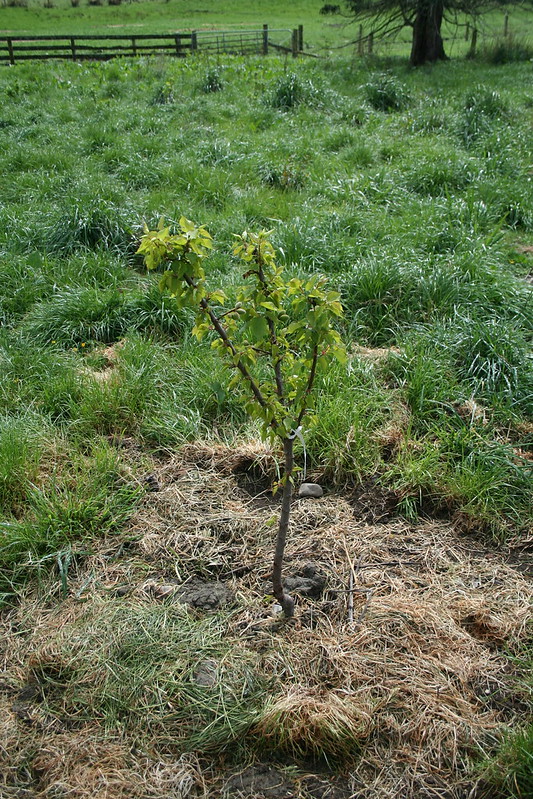
The Moorpark is the next oldest orchard planting.  Flowering later than the Royal Rosa the nightly coverings of frost cloth started in time, and it has the most young green apricots on it.

2015-10-17 - Moorpark apricot tree
Moorpark apricot tree
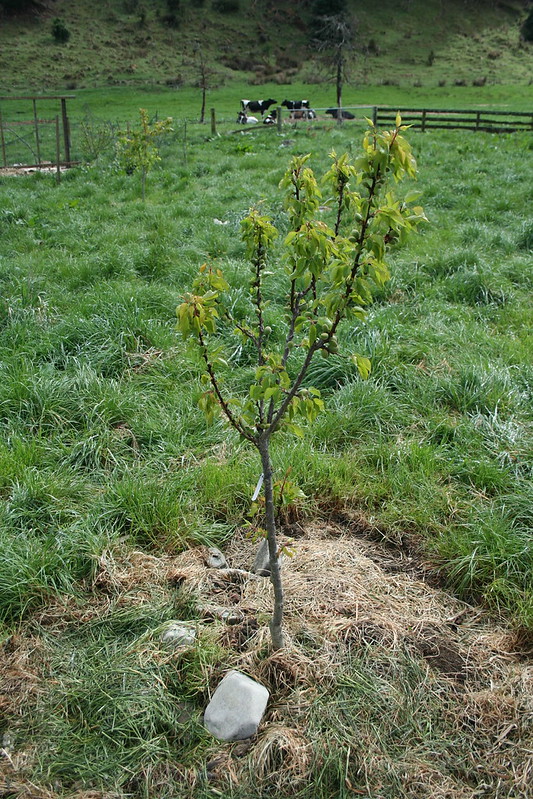
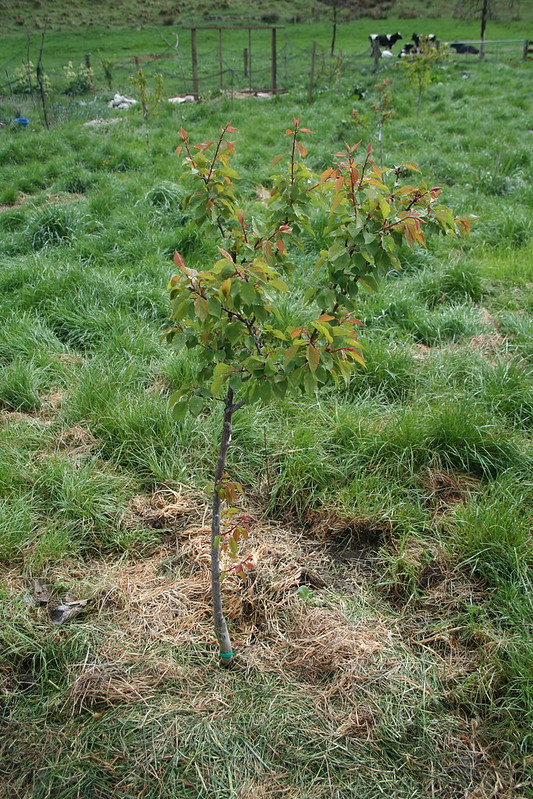
Lastly, is the Cluthagold tree which was planted within the last year.  It also has a decent number of young green apricots on it, considering.

2015-10-17 - Cluthagold apricot tree
Cluthagold apricot tree
All the grass has been cleared from around the apricot trees and a layer of mulch put down.  People say (like robots) that the reason for any problem is the grass is not having been cleared from around the trees, but lets look at the facts.

  1. If the grass is cleared from around the trees, the lack of rain dries out the soil and cracks the ground.
  2. When the long grass is cleared from around the trees, the trunk is often wet despite lack of watering or rain.  Likely from the dew.
To me, the belief that the grass is bad seems to be a religious one.  I think it does more help than harm.  I'd put a photo of some of the cracked ground here, but it just rained this morning for the first time in ages and it won't look as convincing as it would if I had taken a picture yesterday or a day from now.

Saturday, 17 October 2015

The old apricot tree in Spring 2015

At time of purchase, this property had one old diseased apricot tree, a walnut tree and a black boy peach.

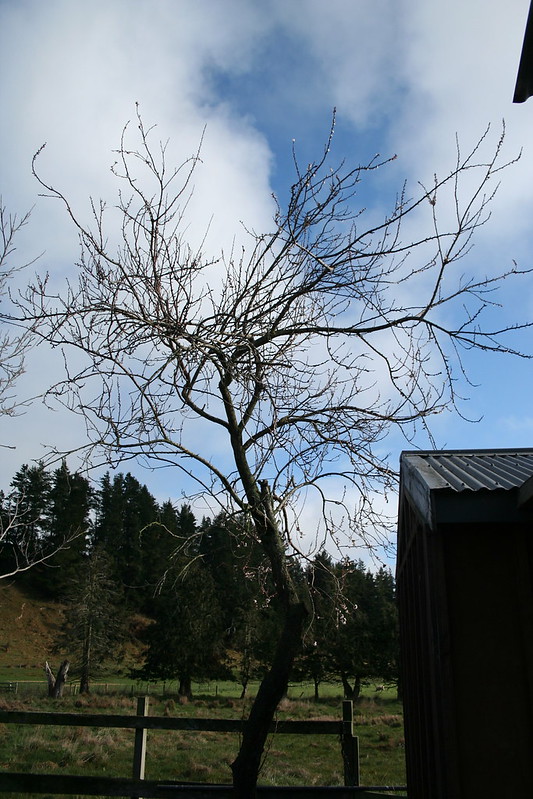
This tree below is an unknown variety of apricot, and to the left of it out of frame is the walnut tree.  The walnut tree has fruited well every year, and in the cupboard I've both jars of walnut in form suitable for cake decoration and also pickled in malt vinegar.  The apricot however, was rather lacklustre and provided about five albeit tasty fruit last year.  In the photo below it can be see seen flowering, it flowered early and suffered little effect from the weeks of frosts which followed.

Old apricot tree at start of spring

The next picture is three weeks on, and while it's hard to make them out, it is covered in young green apricots.

Old apricot tree first fruit photo

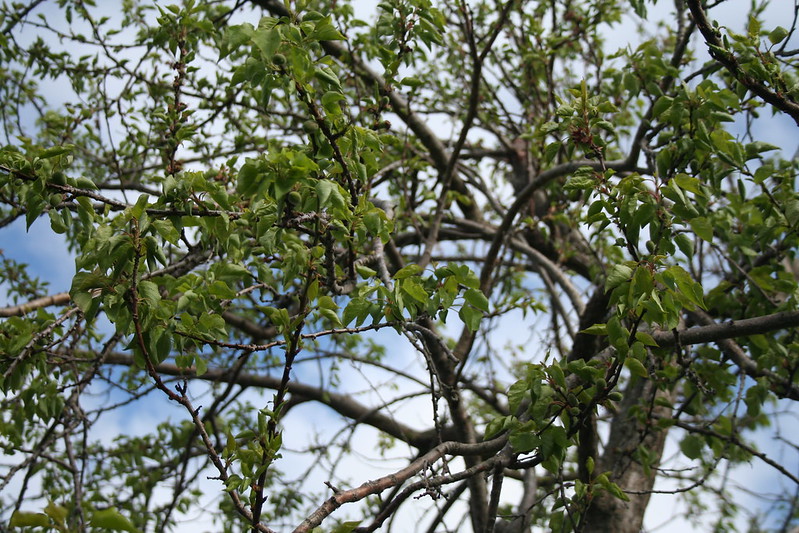
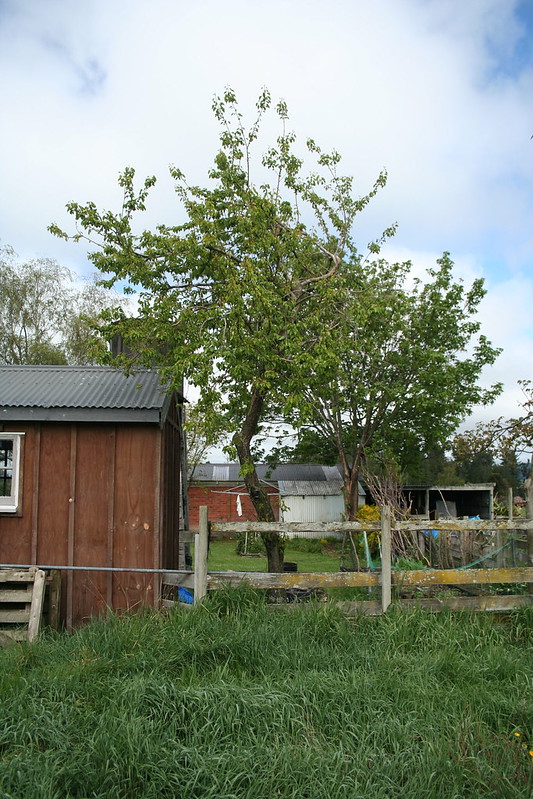
Here's the tree four weeks on, note that behind it to the right is a sycamore tree.  This is the only real place I've seen bees this Spring and even then only yesterday.  Seriously.  I've been out in the paddock daily looking around, and while there might be the odd bumblebee, mostly it's flies that seem to be pollinating the flowers.

Old apricot tree second fruit photo 3

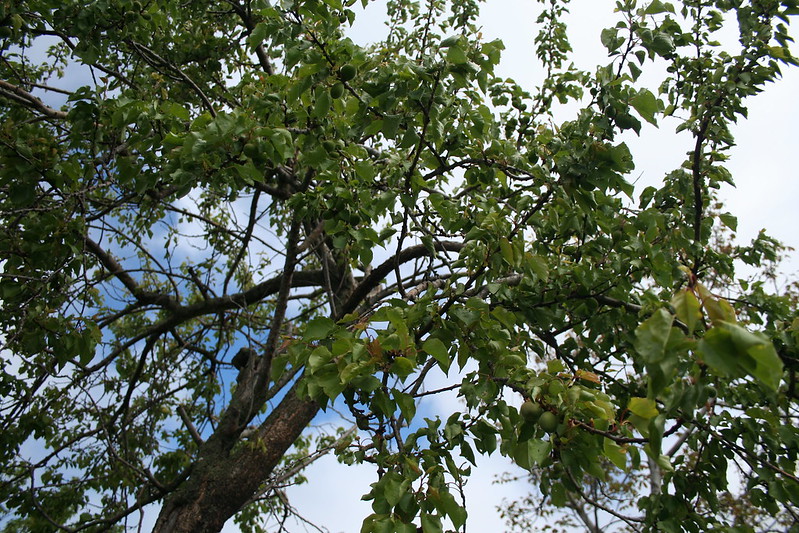
This is a close up of the tree at four weeks on.

Old apricot tree second fruit photo 2

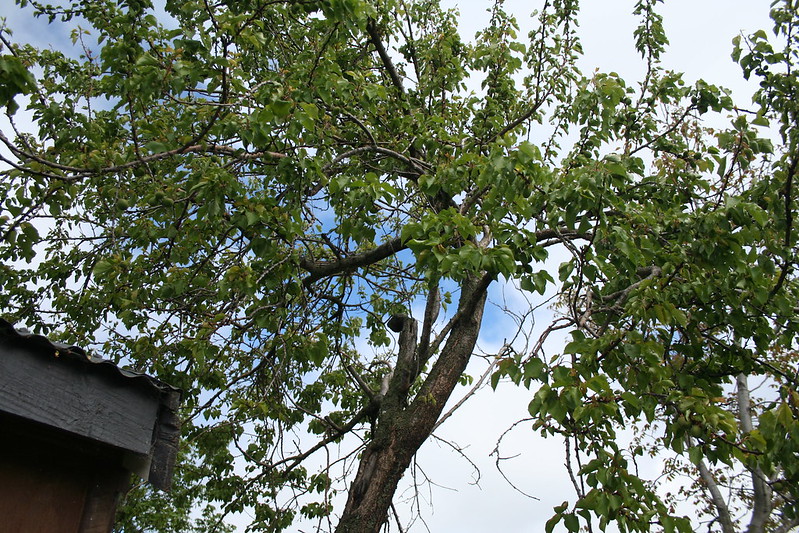
And another.

Old apricot tree second fruit photo 1

This year is looking good for apricots.