Tuesday, 30 January 2018

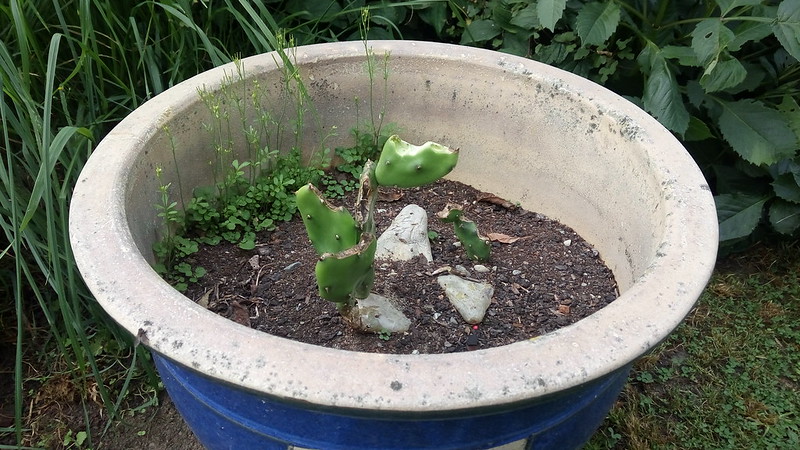
Prickly Pear cactus tasty to animals

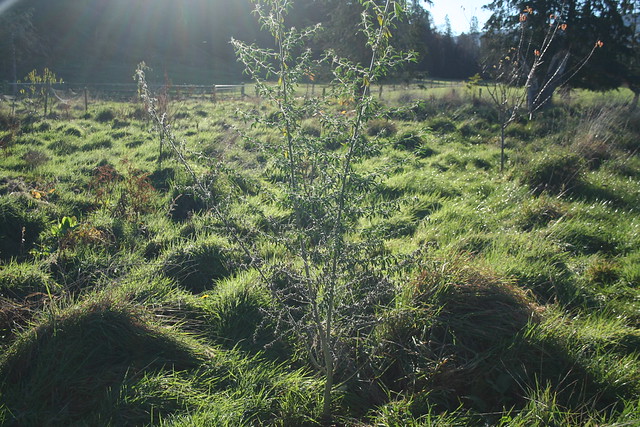
I bought a Prickly Pear cactus from TradeMe.  In theory, this is supposed to have horrific spines that get stuck into you, and ache away for months on end embedded into your hand or wherever.  In practice, either rabbits or possums like the taste of it's pads.  This makes me wonder if it is even a Prickly Pear cactus.

IMG_20180128_184652
Rabbit?  Possum?

Wednesday, 25 October 2017

Sunchokes, corn and garden beds

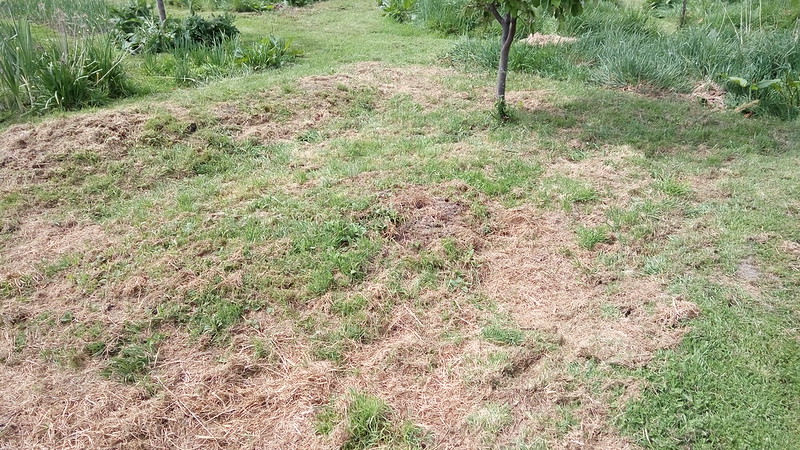
There's been jerusalem artichokes growing in a garden bed for the past four years or so, but mostly they're given away.  The grass grows over them in the dormant seasons, but they've just started to sprout again.  It's been a goal to dig them up and replant maybe eight or so of the best in a different garden bed, clearing this one out.
2017-10-22 - 01 - Progress - Sunchokes
Uncleared jerusalem artichoke bed
Here's the results of the bed being cleared out.  A full barrow load of jerusalem artichokes.  The problem is that if they're dumped in the compost, or for that matter, anywhere out in the paddock, they'll probably come back.
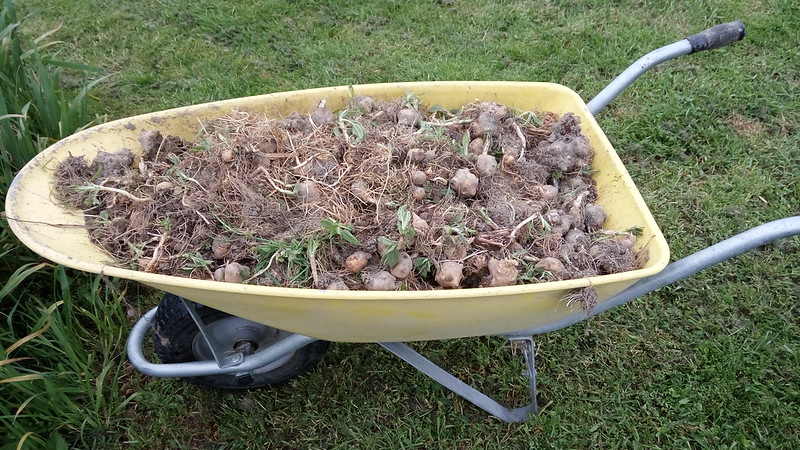
2017-10-22 - 04 - Progress - Sunchokes
Unwanted sprouting jerusalem artichokes

This bed along with the two more closer towards the camera, were used for garlic last year.  The small patch to the right in front of the freshly cleared and dug bed at the back, was used for yams.  The rest of it was also cleared yesterday, which just leaves the one right at the bottom of the shot to be cleared.
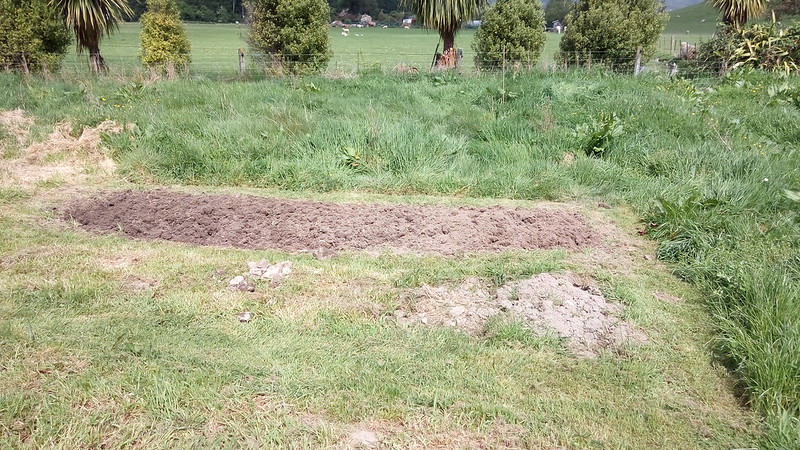
2017-10-22 - 02 - Progress - Sunchokes
Freshly cleared bed
I read about someone else who replants their sunchokes, or jerusalem artichokes, at about half a meter apart or some similar distance.  Eight of the best ones I dug out have been replanted at the West end of this bed.
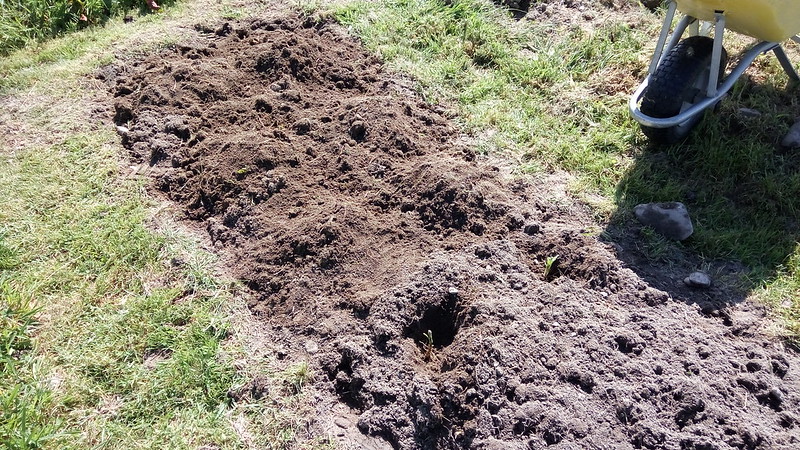
2017-10-22 - 03 - Progress - Sunchokes
Eight replanted jerusalem artichokes
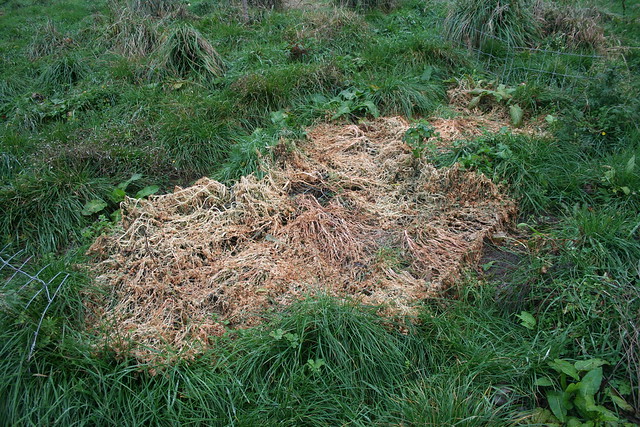
It took a while to work out what to do with the jerusalem artichokes, and leaving the barrow out in the weather didn't seem very effective.  So an old bit of iron left out in the sun will hopefully do the trick.

2017-10-25 - 01 - Progress - Killing sunchokes
Killing the jerusalem artichokes
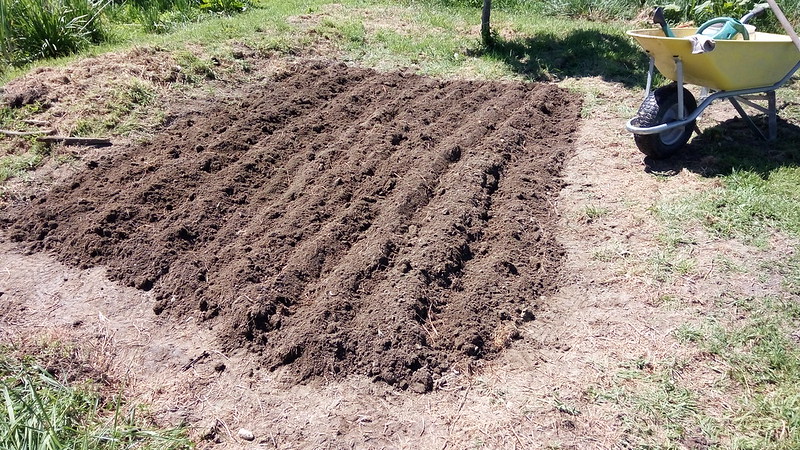
The jerusalem artichoke bed was dug out further, and for some reason the idea of planting corn was quite appealing.  While this bed is going to be used for Bloody Butcher corn, another is going to be used for Painted Mountain.
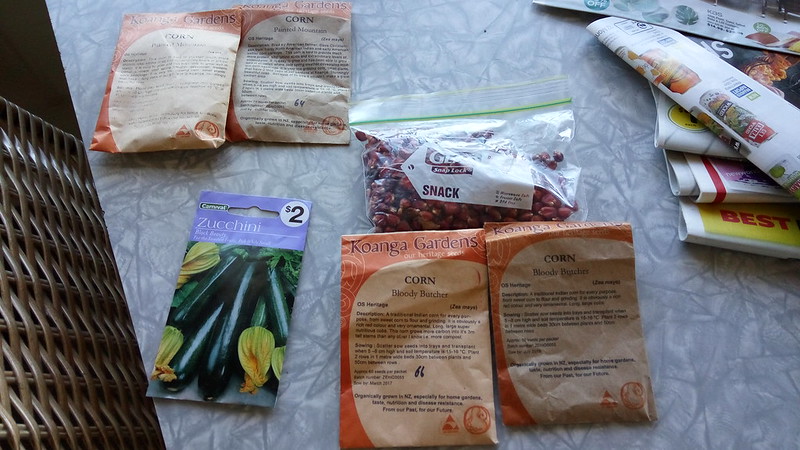
2017-10-24 - 05 - Progress - Corn
Corn seed
As some of the Bloody Butcher seed is quite old, it was sowed quite thickly.  It's easier to thin it out later, than to plant more.
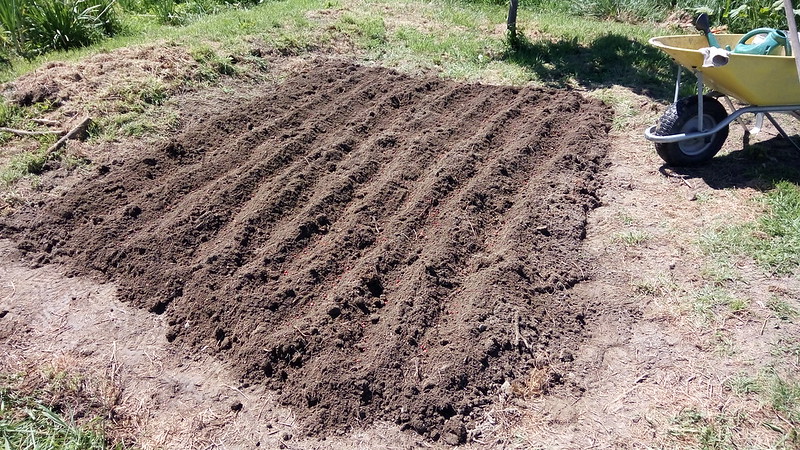
2017-10-24 - 06 - Progress - Corn sowing
Cown sowing
And finally, covered up.

2017-10-24 - 07 - Progress - Corn bed
Corn beds
Next on the agenda are tomatillos, the Painted Mountain corn and brocolli.
Thursday, 8 December 2016

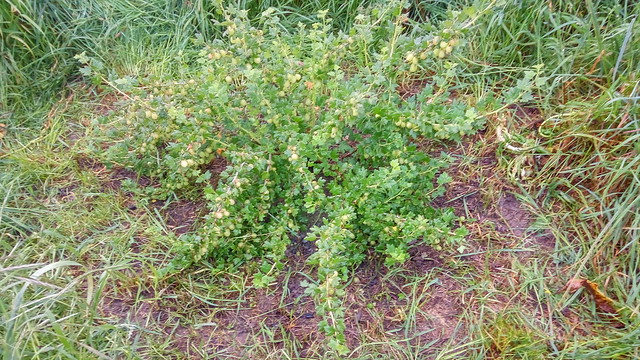
Oldest gooseberry bush

I've just been out to check on my oldest surviving gooseberry plant. It's so heavily laden with fruit, that it's flattened out and most of the branches are laying if not curving down to lay on the ground. I need to do something about this, maybe thin out the fruit, or put some netting around it to hold up the branches, as it would be nice to get all that fruit.

Maybe also put bird netting around it. Though I did that last year, and a starling got in and ate all the fruit anyway.  However, that netting was old grape netting and has the odd hole.

I took cuttings from this in the Autumn, none of them survived.  The cuttings I had both from my other gooseberry plants, and received from other kind souls, all lived.   Not sure why that was.

Gooseberry - Invicta
Invicta Gooseberry

Monday, 3 October 2016

Rhubarb, berries, pear tree, broad bean landrace and comfrey

I've made another video taking note of things that I've not recorded, or have visibly changed. This will be quite helpful in keeping track of things like having a visual record of which pear is which on the double-grafted one.  You can't trust the nurseries and orchards and should check these things yourself, I've had several instances where they've botched things.  And also noting the traits of individual varieties of broad bean in the landrace as they cross-pollinate from year to year.

It's another foggy Spring morning. The fog actually lifted earlier, and the sun was so low I almost had to close the blinds so I could work. The grass and dock have taken off in the past two weeks, as has the rhubarb.  I'm going to have to clear the grass before making movies, or taking photos, as it is quite hard to see some things that are growing amongst grass.

I increased the quality the phone camera was recording, and used a weight to try and stablise the camera from shaking.  In this case I basically sat the phone sideways on the rock and held it there, carrying it around.  It seemed to make a difference, but wasn't perfect.


Wednesday, 28 September 2016

Mixing iteration and read methods would lose data

I just upgraded to Python 2.7.12 and my code is now erroring with rather unhelpful Mixing iteration and read methods would lose data errors. Googling for this yields a number of StackOverflow posts where people are iterating over a file, and then within the loop, doing calls on the file. This sounds like a good error for their case, but in my case the fixes are somewhat more inane.

This errors:

    persistence.write_dict_uint32_to_list_of_uint32s(output_file, { k: [] for k in read_set_of_uint32s(input_file) })
This fixes that error:
    set_value = persistence.read_set_of_uint32s(input_file)
    persistence.write_dict_uint32_to_list_of_uint32s(output_file, { k: [] for k in set_value })
Another error at another location:
    persistence.write_set_of_uint32s(output_file, persistence.read_set_of_uint32s(input_file))
Some simple rearranging makes this error go away:
    set_value = persistence.read_set_of_uint32s(input_file)
    persistence.write_set_of_uint32s(output_file, set_value)
And finally, the next error at another location:
def read_string(f):
    s = ""
    while 1:
        v = f.read(1) # errors here
        if v == '\0':
            break
        s += v
    return s
And the fix for this:
def read_bytes(f, num_bytes):
    return f.read(num_bytes)

def read_string(f):
    s = ""
    while 1:
        v = read_bytes(f, 1)
        if v == '\0':
            break
        s += v
    return s
This error seems like a horribly broken idea, that is popping up in places it wasn't intended.

Wednesday, 21 September 2016

Grafting fruit trees, and various things growing

Going back to my old photos, I find it's often difficult to make out the things that were the reason I took the photo anyway.  Like which tree is which.  And it's just so much work, that I am also finding that I am not doing the things I should do, like note what trees are pollinating at the same time - so as to work out why one tree has not fruited.

So this is the first video that catalogs the progress of things.  It starts with my garlic, then some fruit tree grafts, then the Green Mountain potato onion and finally some more fruit tree grafts.  It makes sense to do weekly fruit tree flowering videos, so I can have a visual record of how well things that are supposed to pollinate each other sync up.  Although they won't be posted, if I do post any videos it'll mostly be ones that do a general overview, or concentrate on progress of certain projects.

This is a shakey video, as it's the first one I've made.  It is intended to catalog all the grafting I've done in the past couple of weeks, so that if the tags are lost, I'll know what is grafted where.  In the past I've used photos for this, but oftentimes they're actually little help and I have little idea what tree I am looking at.  I wonder if someone else owns this property in the far future, if they still have the orchard, whether the videos will still be available for them to work out what is planted where.


I mention Koanga quite a bit for the grafts.   Less than half the scion wood came from Koanga.  The rest was traded with people on the internet for various varieties of scion wood I have here, and other things.

Wednesday, 29 June 2016

This year's apple cider vinegar

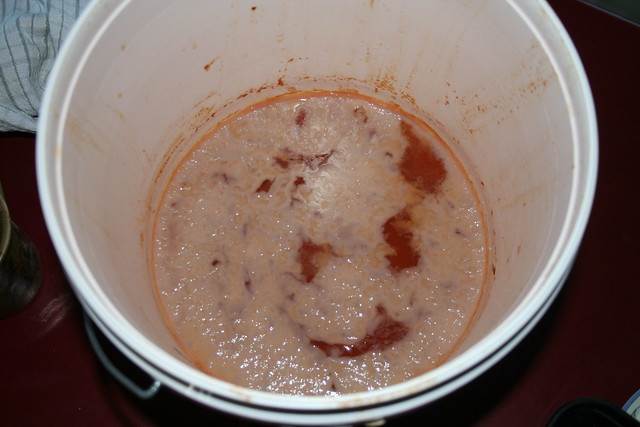
This Autumn's batch of apple cider vinegar is coming along nicely. The mother, or at least I think that's what it is, appears to be floating on top. The last bottle from last year's batch is in use, so when this fresh batch is ready, is something that needs to be worked out.

Vinegar, Apple Cider - 02 - 2016-06-27

Tuesday, 28 June 2016

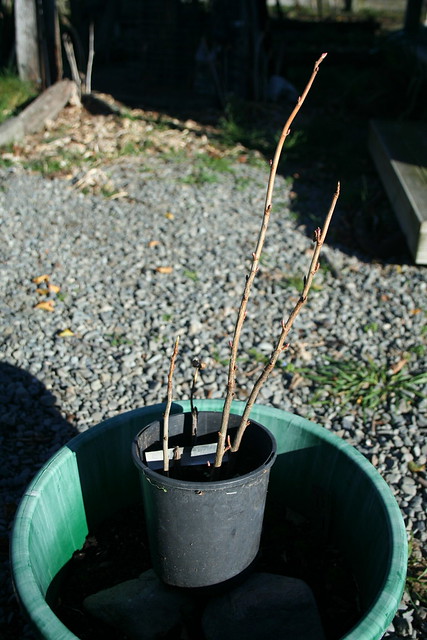
Planting out persimmon seedlings

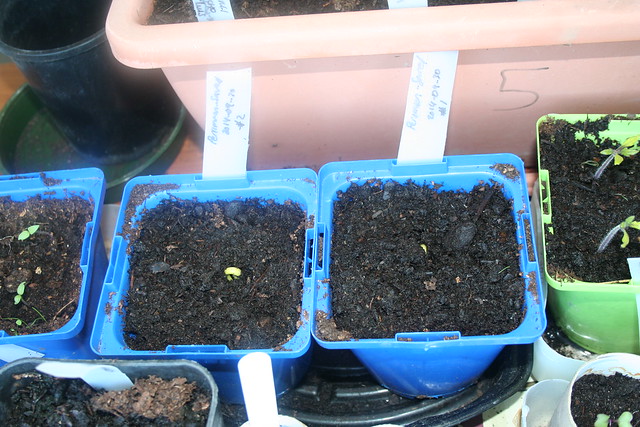
Two summers ago, back in September 2014, I saved and planted out two persimmon seed from the local supermarket.  I scarified them in the refrigerator over the preceding Winter, and put them in these two pots.

Persimmon Seed - 01 - 2014-11-03 - 02 - Germination
September 2014
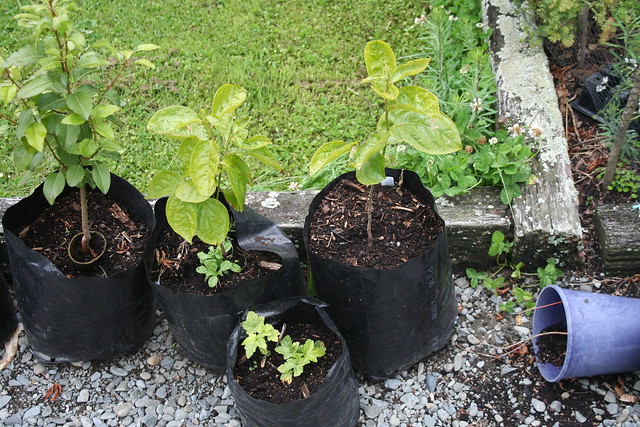
When they grew too big for the pots, I put them in planter bags and lost them amongst a whole clutter of seedlings on the North side of the house.  Eventually, they were rediscovered, identified and put in another clutter of seedlings.

Persimmon - 2015-12-31 - Seedlings
December 2015
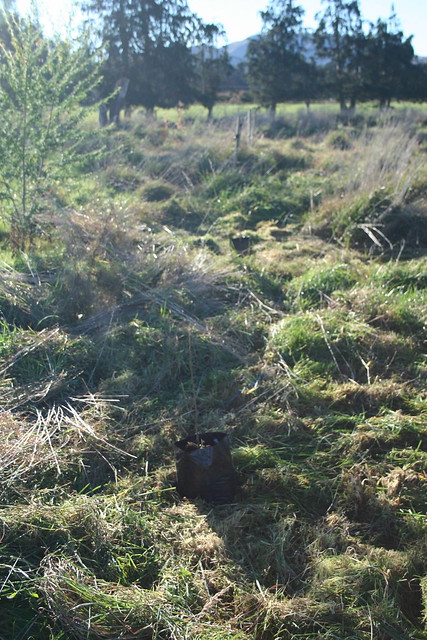
Now that the leaves have dropped from them, I decided to plant them out.  First step was clearing the thick clumps of grass along the selected orchard row.  In the distance, you can see blurry in the background what looks like stakes.  There are two existing persimmon trees there, perhaps 1.5m tall each.   In the foreground is one persimmon seedling in the planter bag, and between the distant stakes and the foreground persimmon you can perhaps see a second persimmon seedling in another planter bag.

Persimmon, seedling - 2016-06-24 - 01 - Pre-planting
June 2016
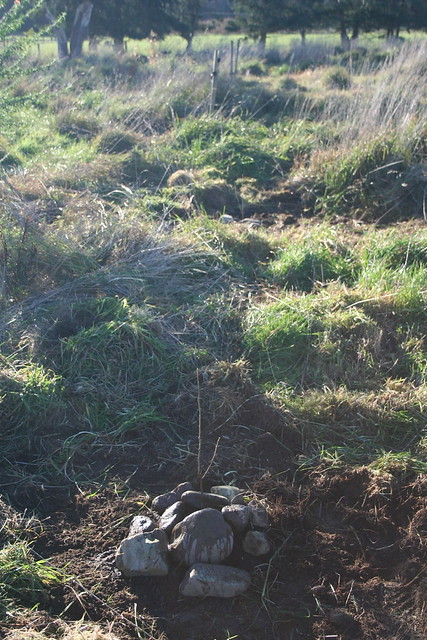
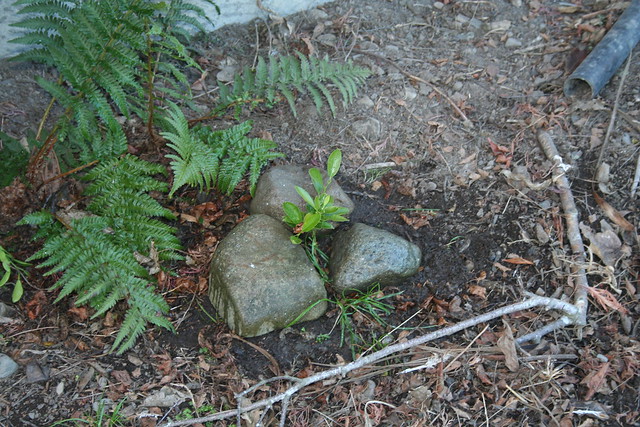
And here they are planted out.  The older staked persimmon trees are more clearly visible in the background, and the midway seedling can be made out by the stones surrounding it.

As I finished planting these out the chickens came over and started scratching around them.  The stones tend to prevent them from doing any damage, or digging anything out that's just been planted.

Persimmon, seedling - 2016-06-24 - 02 - Post-planting
June 2016

Monday, 27 June 2016

Winter pear

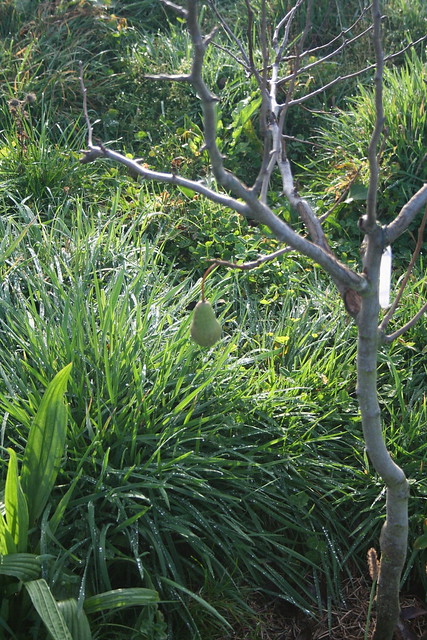
In late Autumn, the Packham's Triumph pear tree flowered in one location and one of these flowers has since pollinated against.. well, I have no idea.  Since then, at the start of Winter, it has gotten down to almost 0°C at least once and there have been white frostings on the ground, but the lone pear keeps growing.

Pear, Packham's Triumph - 2016-06-27 - Winter fruit

Sunday, 26 June 2016

Tree lucerne dying

In the beginning, the idea was to buy or save seed and grow things. In theory what is a permaculture fantasy, in practice it just doesn't work out as idealised. One of the things I bought was tagasaste or tree lucerne seed, from Trade Me.  What tended to happen was that I'd prepare the seed and remove the coats, and find spiders had been growing inside them eating the seed.  Twice I did this.

In the end, I just went online and bought seedlings from Appleton's tree nursery.  It cost me a few bob, but at least it resulted in actual trees and less time wasted.

Unfortunately, a few have been dying off.  They tend to go grey, and I guess the roots die and they can just be pulled out of the soil.  Two to the west of this one died a few months ago, not long after planting.  This one has just started greying (look at the lower part of it) in the last month, I guess.

Tree lucerne - 2016-06-24 - 01 - Diseased

I have another six over the other side of the orchard, and they are consistently fine.  They're sitting up on either side of the water race, so perhaps it's about the drainage.


Saturday, 25 June 2016

Grapefruit seedling #2

The second grapefruit seedling I grew is surprisingly alive. It's a bit more threadbare than the first, but then again it has to deal with the neighbour's herd of fence jumping sheep, and is generally in ground that's pretty dry and ridden with roots from nearby shrubs and other plants.

Grapefruit, seedling - 02 - 2016-06-24

Friday, 24 June 2016

Cuttings and rooted canes

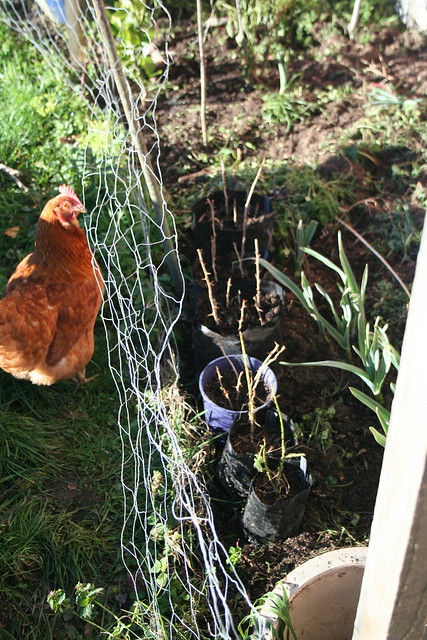
Yesterday, while pulling up the boysenberry canes from under the grass, and  staking them up in a poor mans trellis, I managed to break a few of the canes.  Noticing that they had white roots, I decided to try and pot them for later replanting.

Behind the boysenberry, are two planter bags of cuttings of what I believe to be heritage "Gabrier's Gully Gold Field" gooseberry that someone went out and retrieved.  Named for the location, rather than any particular variety.  And behind that are two more planter bags of Invicta gooseberry cuttings.

Cuttings - 2016-06-24 - Today and yesterdays

Grapefruit seedling #1

This grapefruit plant was grown from seed, in theory there's another planted out alongside the road, but I've not been out to check to see if it still survives.

Will the fruit from this taste okay?  It'll be another couple of years before I get the chance to find out, I guess.  Worst comes to worst, I have loose plants to try grafting things like finger limes onto it, if the fruit it bears are not worth eating or giving away.

Grapefruit, seedling - 2016-06-24

Planting out blackcurrant cuttings

A lot of my existing blackcurrant cuttings I've planted out, are of unknown varieties.  The reason for this is that any way where a name or date is written on plastic, results in faded unreadable plastic within several months to a year.  After that, it comes down to where whatever it was, was planted.  And how reliably the notes are, if there are any.

In this case, I must have started my new tagging regime.  This involves taking segments of coke cans, and inscribing the variety name on them with a sharp implement.  So I am almost certain these are Cotswold Cross blackcurrant cuttings.

Blackcurrant, Cotswold Cross - 2016-06-24 - 01 - Rooted cuttings

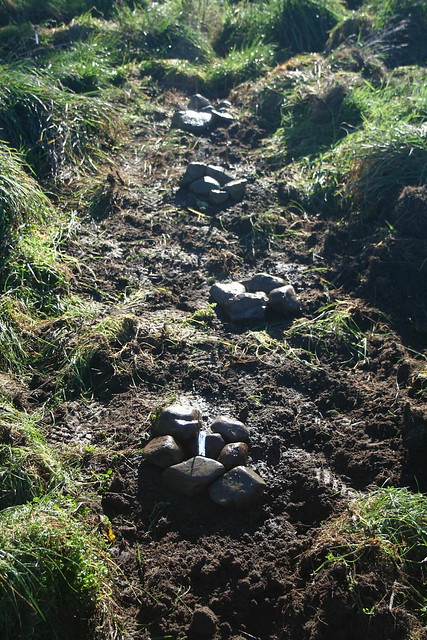
And here they are planted out in the paddock.  The ground is still damp from the rain last night, but I watered them in anyway.  The stones are to prevent the chickens from scratching them out of the ground, as has happened before.

Blackcurrant, Cotswold Cross - 2016-06-24 - 02 - Planted cuttings

All of these have the coke can labels around them, and are labeled on an orchard map.  I'll still need to confirm they are the variety I think they are, based on written and internet descriptions.  But I'll need to do that for all my fruit, as more than a few have turned out to be other than described by whoever they were sourced from.

Poor mans berry trellis

Reading New Zealand fruit books and remembering what I read online, the gist was to cut away canes that had fruited, and to trellis the trailing canes for next year's fruit.  However, one of the books says that generally brambles fruit on 2 year old canes, so how you identify what ones fruited last year I guess is a matter of experience.

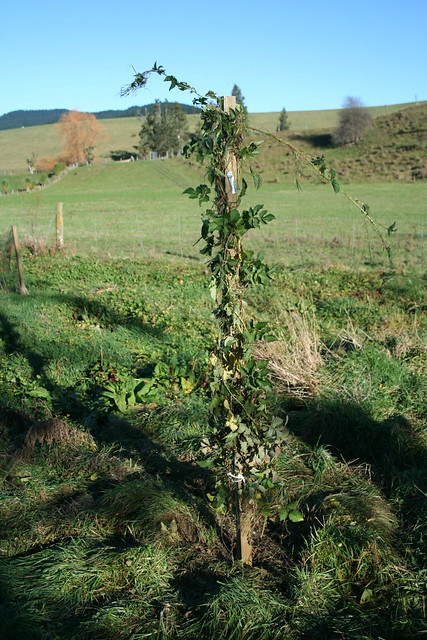
I don't have the experience or tools to make a proper trellis, so I've just taken the poor man's approach.  I basically uncovered all the trailing canes out of the surrounding grass, and tied them up the post with garden twine.

Here's the Tasman boysenberries:

Boysenberry, Tasman - 2016-06-24 - Poor man's trellis

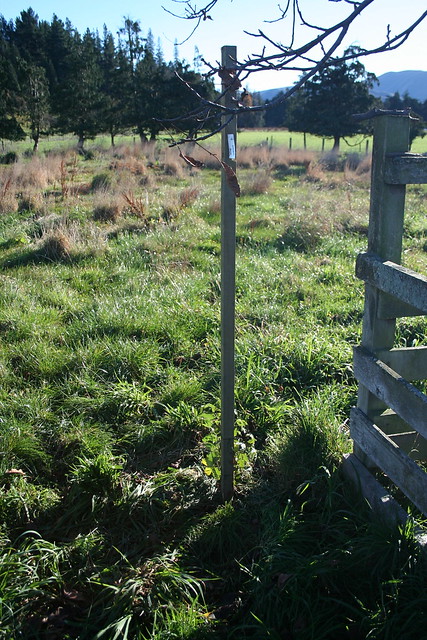
And my neglected Brulee boysenberries.  Unfortunately, these were set back when some grazing cattle ate them down to the ground.  Their growth hasn't been spectacular since then.

Boysenberry, Brulee - 2016-06-24 - Poor mans trellis

I need to come up with a simple way of doing more extensive trellising.

Wednesday, 22 June 2016

Scionwood Exchange

In New Zealand, have fruit trees or bushes and can graft cuttings or wanting to try?

I'm exchanging cuttings from my fruit trees this Winter, with some other interested people who have their own selection of fruit trees/bushes.  If you're googling for scions/cuttings for grafting in New Zealand and have your own selection to exchange, please comment and we'll get in touch.

Here's my exchange list for Winter 2016:

  • Almond - Monovale
  • Apple - Granny Smith
  • Apple - Montys Surprise
  • Apple - Peasgood Nonsuch
  • Apple - Splendour
  • Apple - Cider - Brown's Eater
  • Apple - Cider - Kingston Black
  • Apple - Cider - Lady Finger Cider
  • Apple - Cider - Yarlington Mill
  • Apricot - Cluthagold
  • Apricot - Moorpark
  • Apricot - Royal Rosa
  • Apricot - Unknown (older tree)
  • Cherry - Lapin
  • Fig - Brown Turkey
  • Fig - French Sugar
  • Grape - Albany
  • Mulberry - Black
  • Nectarine - Fantasia
  • Nectarine - Goldmine
  • Olive - Frantoio
  • Peach - Black Boy
  • Peach - Golden Queen (from seed)
  • Peach - Yellow (Unknown, mislabeled Black boy from nursery).
  • Peach - Flatto (still need to look at tree to see if can take cuttings).
  • Pear - Packham's Triumph
  • Pear - Winter Nellis
  • Pear - Taylor's Gold
  • Plum - Black Amber
  • Plum - Coes Golden Drop
  • Plum - Greengage
  • Plum - Hawera
  • Plum - Prune - Italian
  • Plum - Santa Rosa
  • Plumcot
  • Quince - Smyrna
  • Walnut - Unknown (decent sized nuts, reliable bearer).
Bushes for grafting or rooting cuttings:
  • Citrus, Grapefruit, Golden Special.
  • Currant, Black, Magnus.
  • Currant, Black, Cotswald Cross.
  • Currant, Red, Unknown (mislabeled White Currant from Mitre 10)
  • Currant, Red, Unknown (unlabeled from nursery).
  • Currant, Red, Gloria de Versailles.
  • Gooseberry, Invicta.
Roots and other things:
  • Artichoke, Jerusalem.
  • Comfrey, roots.
  • Garlic, Takahue Red.
  • Yacon.

Sunday, 19 June 2016

Yam harvest - Winter 2016


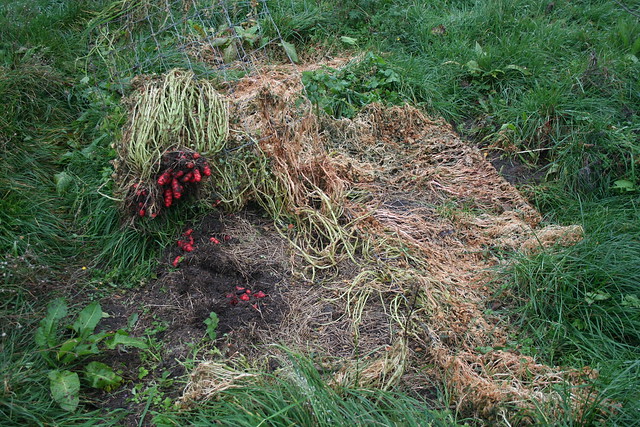
There have been a few frosts and the yams have died back, so it's time to start harvesting before the grubs eat them all.  Last year's harvest was a debacle and the grubs got most of them.

I planted late in January, as I had read that they don't really start growing until late anyway.  Previous years I've put them in, in the Spring.  But it doesn't seem necessary.  I can't find the photos on flickr, so labelled and uploaded them.

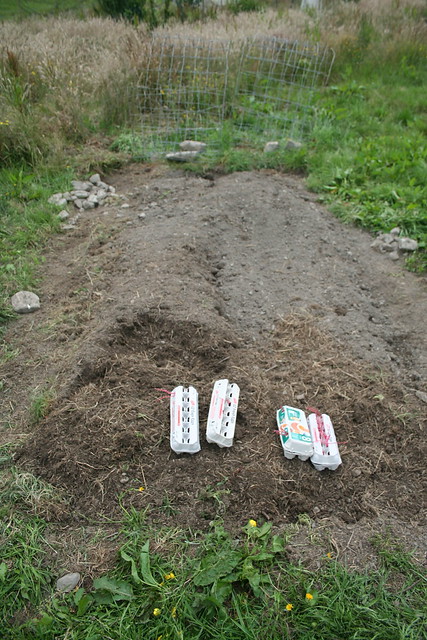
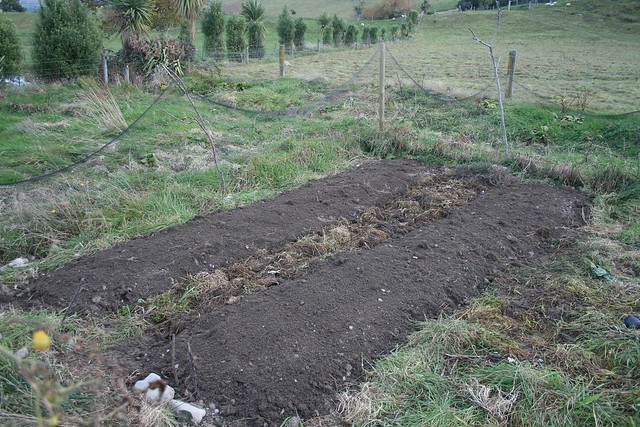
2016-01-07: The bed has been dug and 90% of the stones put aside.  The yams saved from last weeks harvest are sitting there in the egg cartons.  They're survived the Winter pretty well, and the ones with cuts or damage were dipped in ash which seemed to do the trick.

Yams - 2016-01-07 - 01 - Planting

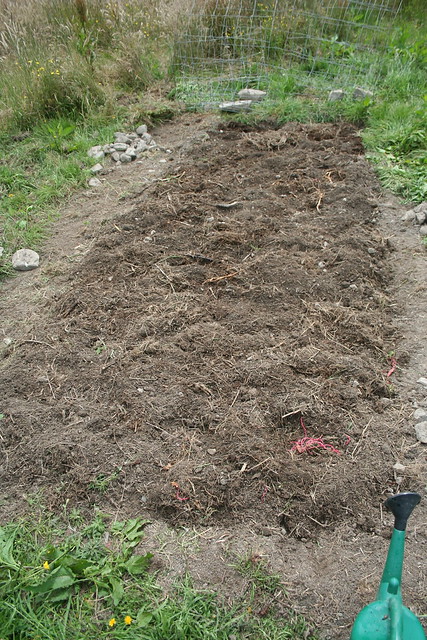
2016-01-07: The yams all planted out.

Yams - 2016-01-07 - 02 - Composting

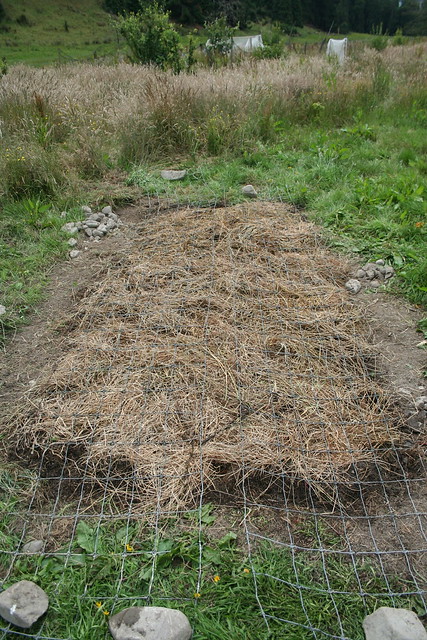
2016-01-07: The netting has been laid down to prevent the free-ranging chickens from scratching the beds out, and a covering of hay has been scattered over top.

Yams - 2016-01-07 - 03 - Chicken protection

The bed pre-harvest today.  Not bad looking considering the one time it was weeded, and perhaps two times it was watered.  The problem with weeding was that pulling out the grass or whatever the weeds were, would easily pull out the yam roots.  So it wasn't really possible to weed without damaging the crop.

Yams - 2016-06-19 - 01 - Beds

Just pulling the netting off pulled out some of the better yams.

Yams - 2016-06-19 - 02 - Digging

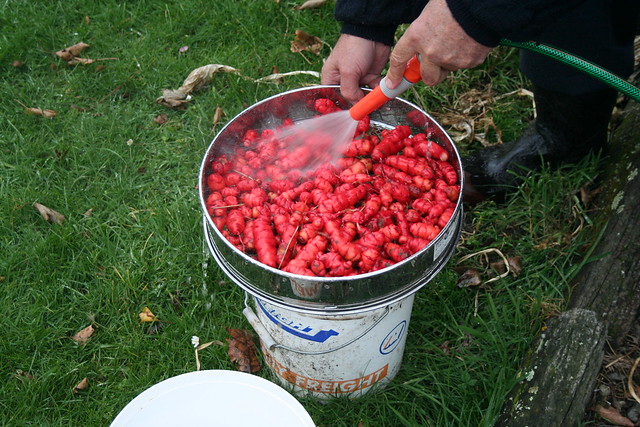
The recipient of the yams doing his own cleaning with the sieve I bought on recommendation from Rowan.

Yams - 2016-06-19 - 03 - Rinsing

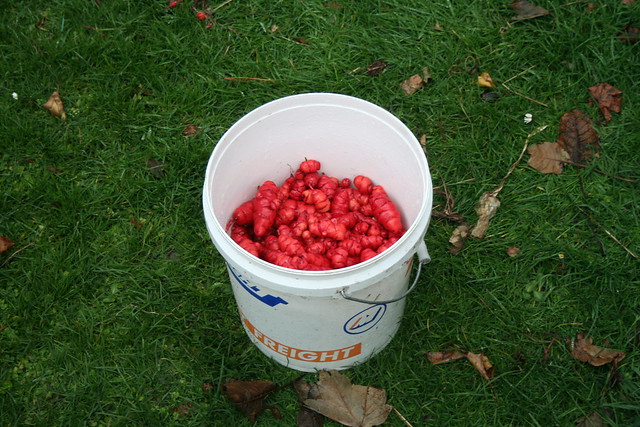
And the cleaned yams.  I picked out 12 of the best and put them in a cupboard in an egg carton for next Spring's planting.  I'll probably pick at least another two dozen as I harvest more.

Yams - 2016-06-19 - 04 - Washed

Not bad for just the effort of one light weeding, perhaps two waterings (the Spring, Summer and Autumn were not that dry here), and the harvest of course.

Garlic Planting - Winter 2016

These are the first two of three garlic beds I've planted this year, both used for the broad bean landrace last year. There's a wider third bed which was dug and planted out in several days of hot weather. Here are the varieties and the beds they're planted in:

  • Bed 1: Ajo Rojo (Trade-Me, 2016)
  • Bed 2: Rocambole Early White (Koanga, 2016)
  • Bed 2: Rocambole Early Red (Koanga, 2016)
  • Bed 2: New Zealand Purple (Koanga, 2016)
  • Bed 3: Takahue Red (Koanga, 2014, replanted)
Here are the two ex-broad bean beds dug up and weeded. There were of course some volunteer broad beans growing, some of which were perennial planted before the last Winter.

Garlic - 2016-06-09 - 01 - Prepared beds

Bed 2: Rocambole - Early White.

Garlic - 2016-06-09 - 01 - Prepared beds - Rocambole Early White - Koanga

Bed 2: Rocambole - Early Red.

Garlic - 2016-06-09 - 01 - Prepared beds - Rocambole Early Red - Koanga

Bed 2: New Zealand Purple.

2016-06-09 - 03 - New Zealand Purple - Koanga

No photos were taken of the planting in beds 1 and 3.  I think some of the varieties were sprouting already, perhaps the Ajo Roja.  My memory is failing me.  I had wanted to get these in earlier, but was too busy to prepare the two existing beds, and dig out the third one.

Wednesday, 11 May 2016

Broad bean (Fava bean) landrace year two

I was originally planning to plant garlic in most of these beds, but garlic ideally goes in on the shortest day of the year which I think is still a month away.  Broad beans however, when planted in the Autumn, are I am told best sprouted and a couple of inches high by the first frosts.  But not high enough to flower.  Last year I think I got them a bit late, and the odd seed popped out of the soil as the frosts hit them.

All of these beds are pre-existing ones, except for the one on the right with the stones alongside it.  Those stones came out of the ground as I was digging it.  There are two rows of two bean varieties in the two larger beds (front right and front left), and one row of two varieties in each of the three long beds behind.

The beds were not amended with anything other than a covering layer of home-made compost, and were prepared solely by breaking up the soil after removing the grass/weeds that had grown over them since Spring or whenever whatever was in them was harvested.  Two beans are planted together at each spot along each row, and the weakest will be either transplanted or discarded.  I used the English RHS planting recommendations, which I think were 60cm between double rows, and around 23cm between each of the rows in the double rows, and 20 cm between each planting in along a row.

Broad bean, Landrace - 2016-05-04 - 01 - Beds prepared and planted'

The selection criteria for now is whatever grows best, given no fertilisation other than the compost.  And as this is the second year all these varieties (around 10) have been grown alongside, there should ideally be some visible sign of cross-pollination.  Of course, they were completely neglected last year, so hopefully there was some cross-pollination.  In any case, I came out of last year with more seed than went into it, so it wouldn't be a complete loss if cross-pollination between varieties is poor.

I'm hoping to find the time to get a paint brush and hand-pollinate maybe the first five plants in each row, perhaps as a limited but doable experiment that doesn't require too much time investment.

Monday, 9 May 2016

Apple butter revisited

Gave away a jar of apple butter today, and we all tried a bit.  I have to say I was pleasantly surprised, as it was a thick spreadable paste with a strong tangy flavour.  Everyone liked it.  Of course, I dumped a lot of sugar into the pot in order to give it a better chance at preservative qualities, and in theory I think there could be a kilogram of sugar between two jars - which was not so appealing.

Either I need to get a sweet apple variety, which does not require added sugar, or to work out the repercussions of not adding sugar to the less sweet varieties.

If you're thinking of making apple butter, I'd recommend giving it a go.  In theory it's a shelf stable preserve that does not require pectin for it to set.  Really, really simple to make.